
The first way
Pre-Bonsai
$99A healthy young tree with its early training done — roots settled, trunk on its way. Every cut from here is yours.
Step 1
Before you choose a tree, it helps to drop what the word "bonsai" has picked up over the years.
Bonsai is an ordinary tree species grown in a shallow pot and shaped over years. Nothing about it is a different plant — the smallness is the craft, not the biology.
A well-started bonsai is a hardy outdoor tree. The reputation for difficulty comes from mass-market trees sold half-dead and species that never suited beginners. Ours are neither.
The tree arrives finished or unfinished — either way, what you're really taking home is a few quiet minutes a week, for years. That's the part people end up loving.
Step 2
Both start lines are always in stock, in four species each. Pre-Bonsai at $99 if you want to shape the tree yourself; Melmac Starter Bonsai at $145 if you want the nursery to finish it first.
The first way
A healthy young tree with its early training done — roots settled, trunk on its way. Every cut from here is yours.
The second way
The same tree, styled and potted by the nursery — ready the day it arrives. Your work begins at watering, not wiring.
Same Pescadero-grown tree as the Pre-Bonsai. The saving is in the pot — precision-made rather than handmade from rare regional clay. The tree never changes.
Step 3
The honest answer: less than a houseplant that hates you, more than a piece of furniture. Here's the shape of it.
Water when the soil surface starts to dry — most weeks that's two or three brief visits. Look at the leaves while you're there. A light trim when something outgrows the silhouette. That's the whole practice: 5–10 minutes.
Your tree spends its first month settling in — some leaf drop and sulking is normal while it adjusts to new light and air. Keep it in bright, indirect light, water as the surface dries, and resist the urge to fuss. Every tree ships with instructions for exactly this month, and it's covered by the 30-day replacement the whole time.
Almost certainly not. Leaf drop in the first weeks is the tree adjusting to a new home, not dying — deciduous species in particular shed and regrow as a matter of course. Check the soil: if it's not bone-dry and not waterlogged, keep to the routine and give it two weeks. If it keeps declining, write to us with a photo — and remember the 30-day replacement exists precisely for this.
Houseplants die quietly; a bonsai tells you what it needs. The species we grow for beginners are outdoor-hardy trees that tolerate imperfect care, the pot is engineered to hold moisture longer between waterings, and the instructions cover the one month where most trees are lost. And if it still goes wrong, we replace the tree — no questions. You're not being tested here.
Step 4
All four are grown here in Pescadero and available both ways. Difficulty is about attention, not skill — a "Steady" tree simply notices neglect sooner.
The classic first tree. Tolerant of varied light and soil, quick to bounce back from mistakes, with fine leaves and bark that gets better every year.
The natural broom form — a tidy, tree-shaped tree from day one. Famously fine branching, and fall color that can flush red.
Vigorous and thick-trunked, with glowing autumn color. Wants consistent watering in summer; rewards it faster than any other maple.
The most beautiful leaf in the practice. Asks for afternoon shade and steady water — a small step up in attention, repaid every October.
Before you go
That's the right instinct — this is a slow hobby. Take the list instead: notes from the nursery, and word when rare trees drop.
Rare trees drop a few times a year. The list gets them first — often the list gets them, period. We only email when it matters.
First claim goes to the list.
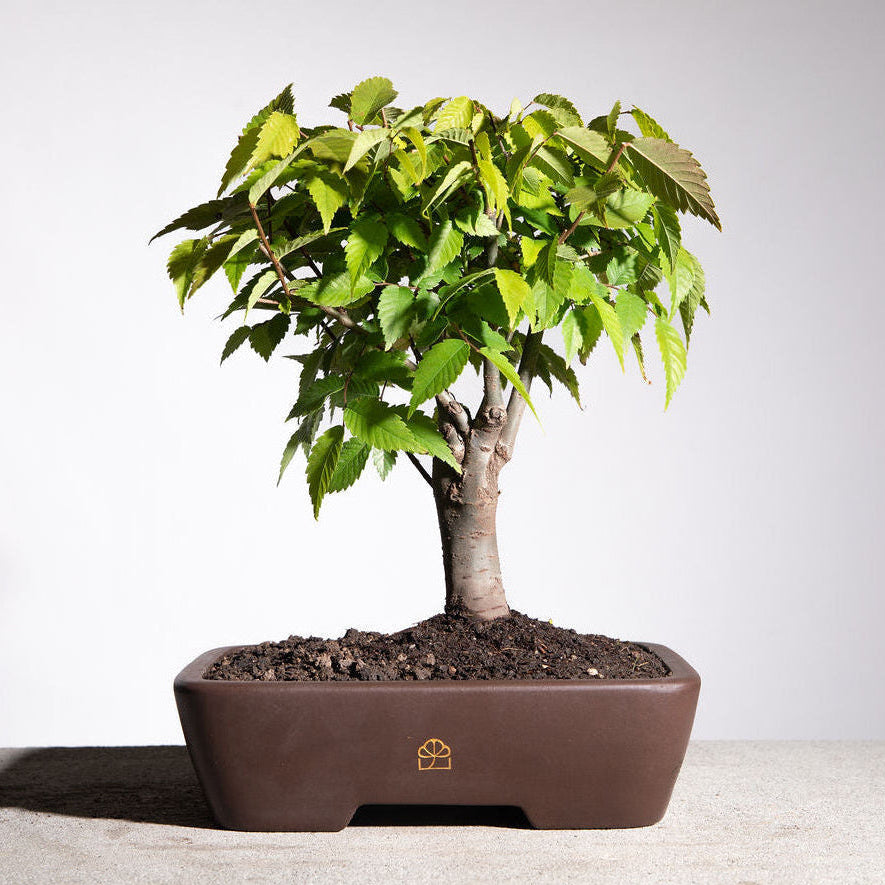
Japanese Zelkova — from the once-only Pescadero 2025–2026 batch. See the tree →